
Restoring the Lifelines: Bringing Water, Power, and Normal Life Back to Venezuela
The June earthquakes destroyed far more than homes — they broke the systems that keep a city alive. Our teams are on the ground helping to put them back together.

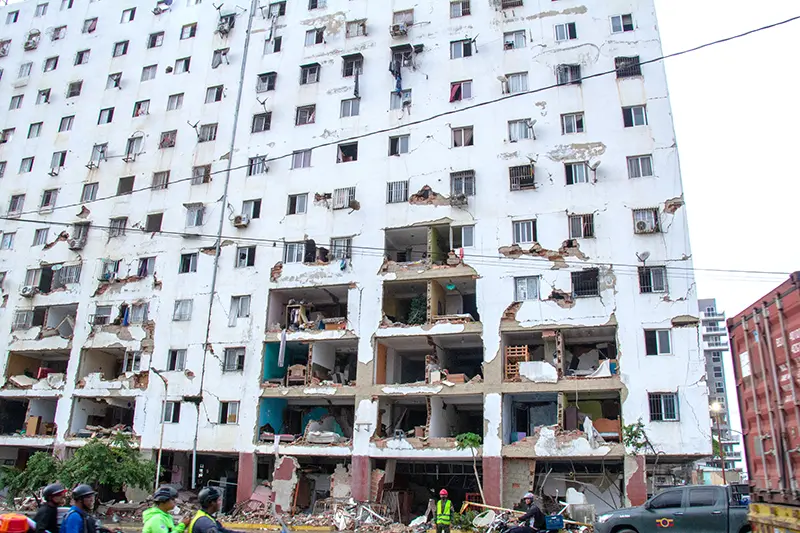
Beyond collapsed buildings, the earthquakes crippled the networks that keep a city alive. We're helping restore them before the crisis deepens.
On the evening of June 24, 2026, two powerful earthquakes — a magnitude 7.2 followed just 39 seconds later by a magnitude 7.5 — struck northern Venezuela. More than 6,000 people were killed and tens of thousands injured. Entire neighborhoods in Caracas, La Guaira and other northern cities were reduced to rubble; in the hardest-hit areas of La Guaira state, up to 80% of buildings were reported collapsed.
The shaking didn’t stop at homes. Satellite analysis suggests close to 600,000 buildings were damaged across the country, among them nearly 40 hospitals and more than 400 schools. And beneath the visible ruins lies a second, quieter disaster: the destruction of the infrastructure that keeps a city alive.
A city without water is a city at risk
Water systems failed across the affected states. Power grids went dark from Caracas to Valencia. Roads cracked, and a June 26 aftershock brought down the bridge connecting Caraballeda to the rest of La Guaira. The UN puts damage to water, sanitation, energy and transport systems in the billions of dollars.
These are not abstract losses. Within two weeks of the earthquakes, doctors in Catia La Mar began reporting a rise in skin infections and diarrheal diseases — a direct result of unsafe water and poor hygiene. Aid workers warn that without rapid restoration of water and sanitation, this disaster could be followed by outbreaks of preventable disease. Rebuilding the lifelines is not a secondary task. It is a humanitarian priority.
How we help
The Relief Bridge Foundation’s goal is simple to state and hard to achieve: help people return to their normal lives as quickly as possible. Among our on-the-ground volunteer groups are professional construction and engineering contractors — teams who know how to rebuild water lines, restore electrical networks and make damaged buildings safe again.
We don’t work alone, and we don’t work at cross-purposes. Our teams coordinate every step with municipal services — the people who know their city’s networks block by block — so that repairs are prioritized correctly, efforts aren’t duplicated and restored systems are safe. The aim is twofold: bring water and power back online fast, and stop the sanitary situation from sliding into a public health crisis.
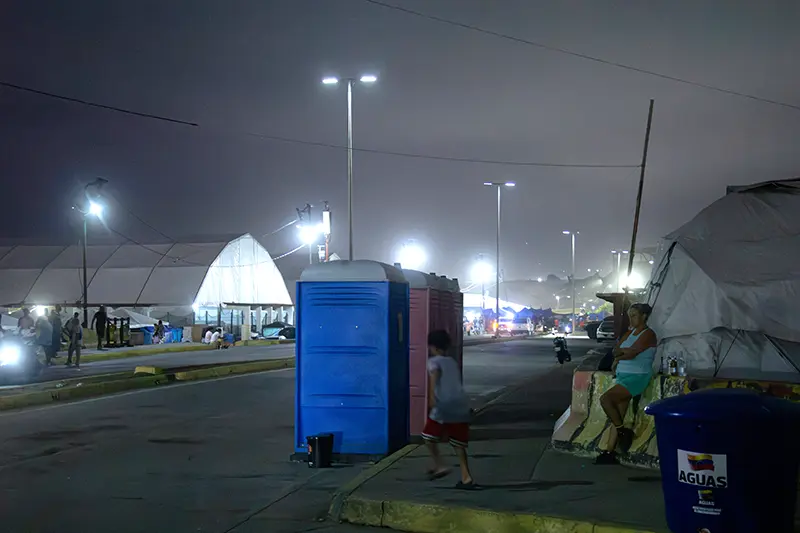
Decisions made on the ground
Needs change by the hour after a disaster, and no one understands them better than the people living through it. That’s why our teams make decisions on site: assessing damage firsthand, listening to residents and city engineers, and directing our resources to where they will do the most good today — not where a plan drawn up weeks ago says they should go.
The road ahead
Recovery will take months, and the needs remain enormous. But every repaired water line, every neighborhood with lights on again, every school that reopens is a step toward normal life — and toward dignity — for the families of northern Venezuela.
The Relief Bridge Foundation will stay on the ground for as long as it takes.